




Table of Contents
- The Core Difference between Clear Aligners and Braces
- How Clear Aligner Treatment Is Different from Braces
- How Much Do Braces and Aligners Cost
- Who Is a Good Candidate for Clear Aligners vs Braces
- How Aligners and Braces Compare Day to Day
- How Long Clear Aligners and Braces Really Take
- Choosing the Right Option for Your Smile
- FAQs
Key Takeaways
|
If you want a straighter smile but can't quite decide between clear aligners vs braces in Auckland, you are not alone. The good news is that both options genuinely work, and for most people, clear aligners have become the more practical, lifestyle-friendly choice. But the right answer still depends on your teeth, your habits, and what you actually need from treatment.
Ready for a Smile Makeover?Smilepath makes it simple to find out if clear aligners for adults in Auckland are right for you, all from home. |
|---|
The Core Difference between Clear Aligners and Braces
At their most basic, both treatments move your teeth using sustained, controlled pressure. The big difference is how. Braces for teeth in Auckland use metal brackets bonded directly to each tooth, connected by wires that are tightened at regular clinic visits. The hardware stays on around the clock for the entire treatment period, which typically runs anywhere from 18 months to three years, depending on case complexity.
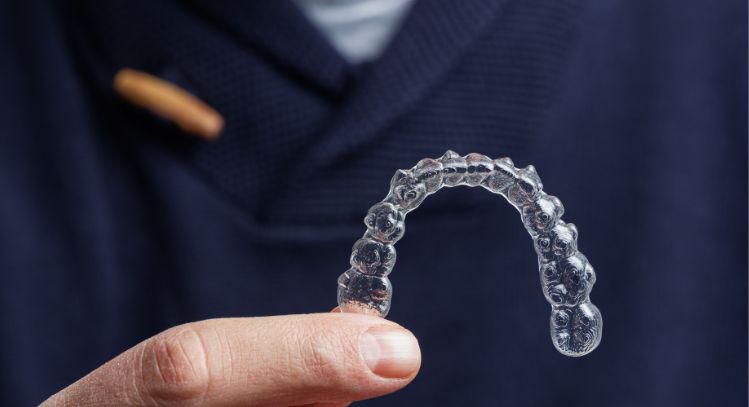
Clear aligners, on the other hand, are custom-made transparent trays worn over your teeth. Each tray shifts your teeth a fraction at a time, and you move through a series of them over the course of your treatment. They are removable, which changes almost everything about day-to-day life during treatment.
How Clear Aligner Treatment Is Different from Braces

Most people who switch from braces to aligners describe the experience as noticeably smoother. The trays are made from medical-grade, smooth-edged plastic, so no brackets are rubbing against the inside of your cheeks, and no wires snap on a piece of crusty bread. That said, it is not entirely sensation-free. Each new tray applies pressure as it starts moving your teeth, and for the first day or two after a switch, you will feel it. A mild ache is completely normal and usually settles within 48 hours.
Braces, especially in the early weeks, tend to cause more consistent discomfort. Mouth ulcers from bracket irritation are common initially, and tightening appointments can leave your teeth sore for a few days. Most patients adapt, but there is a longer adjustment curve.
To make things easier, here’s a quick comparison of clear aligners and braces side by side.
|
Feature |
Clear Aligners |
Traditional Braces |
|
Visibility |
Nearly invisible |
Clearly visible metal or ceramic |
|
Removability |
Fully removable |
Fixed throughout treatment |
|
Eating restrictions |
None (remove to eat) |
Many (avoid hard, sticky foods) |
|
Oral hygiene |
Easy to maintain |
Requires extra tools and effort |
|
Comfort |
Generally high; smooth edges |
Moderate; brackets can irritate |
|
Treatment time |
4–18 months (mild to moderate cases) |
18 months–3 years |
|
Clinic visits |
Less frequent |
Every 4 to 8 weeks for tightening |
|
Best for |
Mild to moderate crowding, spacing |
Complex bites, severe crowding |
Straighten Your Smile without Slowing Your LifeSmilepath Clear Aligners help you straighten your teeth comfortably and discreetly with a simple at-home process. |
|---|
How Much Do Braces and Aligners Cost
Cost is usually one of the first questions people ask, and understandably so. Braces for teeth in Auckland at a traditional orthodontic clinic typically range from NZD $3,000 to $13,000 or more for a full treatment course. The price of braces varies depending on case complexity, clinic location, and whether you choose metal or ceramic brackets.
Affordable aligners in Auckland through providers like Smilepath start from considerably less. Their clear aligner treatment is currently priced from $1,549, which is a significant difference. This lower price of aligners reflects the at-home model, where impressions and check-ins are managed remotely rather than through multiple in-clinic appointments. For straightforward cases of crowding or spacing, the clinical outcome is comparable, and the cost savings are real.
It is worth noting that more complex orthodontic cases may still need in-clinic treatment, and no reputable aligner provider should skip a proper assessment before you start.
Who Is a Good Candidate for Clear Aligners vs Braces
This is probably the most important question in the whole aligners vs braces comparison, and the honest answer is nuanced. Aligners are genuinely excellent for a wide range of cases, but they are not a universal solution.
Clear aligners tend to work well if you:
- Have mild to moderate crowding, gaps between teeth, or minor spacing issues
- Have a fairly straightforward bite with no significant over or underbite
- Are an adult or older teenager who can commit to wearing trays for 20 to 22 hours daily
- Want a discreet treatment that does not interfere with professional or social life
- Have healthy gums and no active tooth decay
Traditional braces are usually the better route if you:
- Have severe crowding or significant bite issues (large overbites, underbites, open bites)
- Need precise rotational control over specific teeth
- Are a younger patient still in active jaw development
- Struggle with the self-discipline of wearing removable trays consistently
The compliance factor is worth sitting with. Aligners only work if you wear them. Unlike braces, which are doing their job 24/7 whether you think about them or not, aligners require you to put them back in after every meal and snack. People who find themselves leaving the trays out for hours at a time will see slower progress or reduced results.
Improve Your Smile OvernightSmilepath's NightOnly Clear Aligners work while you sleep, so you can straighten your teeth without wearing trays during the day. |
|---|
How Aligners and Braces Compare Day to Day

Beyond clinical outcomes, a lot of people make their choice based on what treatment actually looks and feels like day to day. And on that front, the difference is pretty significant.
With braces, your diet changes. Anything hard, chewy, or sticky becomes a potential hazard for brackets and wires. Think corn on the cob, toffees, hard crusty bread, and whole apples. That is not necessarily a dealbreaker, but it is a real adjustment over 18 months or more. Cleaning also takes longer. You will need to work carefully around brackets with interdental brushes or a water flosser to prevent plaque buildup and reduce the risk of white spot lesions forming around the brackets.
Aligners sidestep most of this. You take the trays out to eat and drink anything other than plain water, so your diet stays exactly as it is. Brushing and flossing proceed as normal. The main discipline is putting the trays back in promptly and cleaning them regularly so they stay clear and odour-free.
For people in professional roles, public-facing jobs, or anyone who just does not want their orthodontic treatment to be immediately visible, the discretion of aligners is a meaningful quality-of-life advantage. At-home teeth straightening with clear aligners through Smilepath means the best orthodontic treatment in Auckland that does not require repeated trips to a clinic.
How Long Clear Aligners and Braces Really Take
Treatment timelines are one area where generalisations can be misleading, because so much depends on the individual case. That said, some broad patterns are consistent.
For mild to moderate cases, clear aligner treatment through Smilepath typically runs between 4 and 8 months. More involved cases may extend to 18 months. Traditional braces for comparable cases usually take 12 to 24 months, and complex cases can run to three years or more.
One thing that genuinely affects aligner timelines is compliance. A patient who wears their trays for 22 hours a day will progress faster than one who averages 16 hours. Braces do not have this variable since they are always working. So if you know you would struggle with the discipline side, that is worth factoring into your decision.
Choosing the Right Option for Your Smile
When you step back from the details, the decision usually comes down to two things: case suitability and lifestyle fit. If your case is mild to moderate and you value discretion, flexibility, and a more affordable path, clear aligners for adults in Auckland are a strong and increasingly well-supported option. Smilepath has helped over 10,000 Kiwis through the process, and for many adults across Auckland, it has been a far less disruptive way to reach the same result.
If your bite is complex or your case genuinely needs the precision of fixed appliance mechanics, then braces remain the clinically recommended route, and a qualified orthodontist should be your first conversation.
The most important step is an honest assessment of where your teeth are starting from. A free smile assessment takes just a few minutes and gives you a clear picture of whether clear aligner treatment is appropriate for your specific situation.
FAQs
If the case is of a mild to moderate nature, clear aligners deliver comparable results to braces while offering greater comfort, discretion, and flexibility at the same time.


 Australia
 New Zealand
 Malaysia
 English
 Portuguese
 English
 English
 English
 English
 English
 Canada