


Eating Becomes Harder
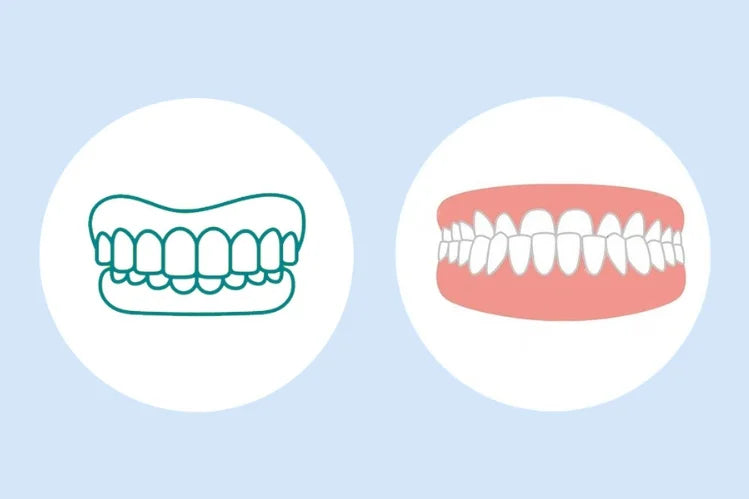
When your upper teeth sit too far forward over the lower ones, your bite pays the price:
Pressure is distributed unevenly across your teeth, causing discomfort with every meal.
Certain teeth, particularly the front ones, wear down faster than they should under the strain.
Your jaw works overtime to compensate for the imbalance, leaving it fatigued and sore after eating.
Your Jaw Joints Suffers
A misaligned bite forces your jaw muscles to work harder than they were designed to. Left unaddressed, this leads to:
Persistent jaw tension or soreness that builds gradually and becomes harder to ignore.
Clicking or popping from the jaw joint when you open or close your mouth.
Temporomandibular Joint Disorder, which brings headaches, facial pain, and restricted jaw movement into the picture.
Your Appearance Gets Affected
An overbite does more than affect function. It changes how your face looks and how you feel about it:
Protruding upper teeth alter the natural profile of your face in ways that feel difficult to overlook.
A pronounced overbite can make the lower face appear compressed and the chin less defined.
Many people with an overbite hold back their smile in photos and conversations without even realising why.


 January 27, 2025


 Australia
 New Zealand
 Malaysia
 English
 Portuguese
 English
 English
 English
 English
 English
 Canada