


Oral Health Suffers
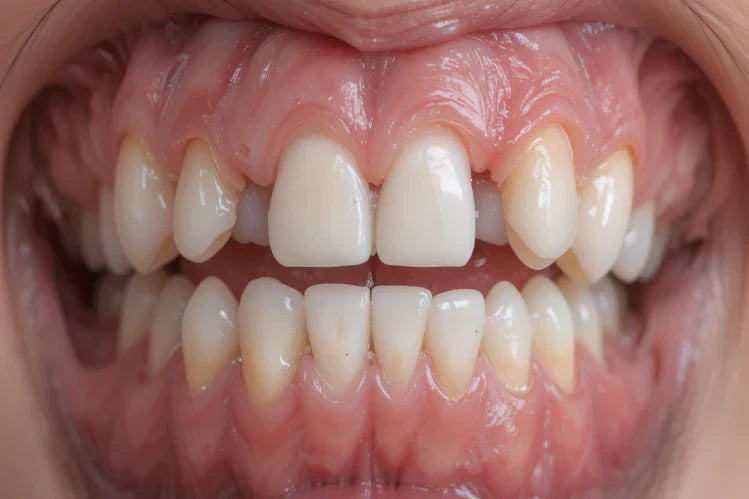
Even a small gap can quietly create functional issues that build up over time:
Food gets caught in the spaces regularly, accelerating plaque buildup and raising the likelihood of decay and gum inflammation.
Gaps give neighbouring teeth room to drift or tilt, which gradually disrupts your bite and overall alignment.
Chewing pressure distributed unevenly across your teeth can wear down enamel and trigger sensitivity over time.
Dental Risks
Spaces between teeth can carry consequences that are not immediately obvious:
Bone loss around affected teeth can develop due to reduced contact and insufficient stimulation in those areas.
Bite function suffers noticeably when gaps are wide or occur alongside other alignment problems.
Speech patterns can shift, producing lisps or whistling sounds, particularly when gaps affect the front teeth.
Confidence Is Impacted
Gapped teeth shape the way you see your own smile and often how you think others see it, too:
Visible spaces make many people reluctant to smile openly, whether in conversation, at social events, or in photos.
Cultural perceptions around gaps vary widely, and in some contexts, they are associated with immaturity rather than adulthood.
A broken smile line affects the overall balance of your facial features in ways that are subtle but real.


 March 5, 2025



 Australia
 New Zealand
 Malaysia
 English
 Portuguese
 English
 English
 English
 English
 English
 Canada